The Problem & Opportunity
Salaried workers have an employer picking the 401(k), matching contributions, and adjusting pay for inflation. Full-time creatives are their own benefits department, with neither the training nor the bandwidth to take that on. I scoped this study to mid-career creatives, aged 30 to 50, fully self-employed by their creative work.
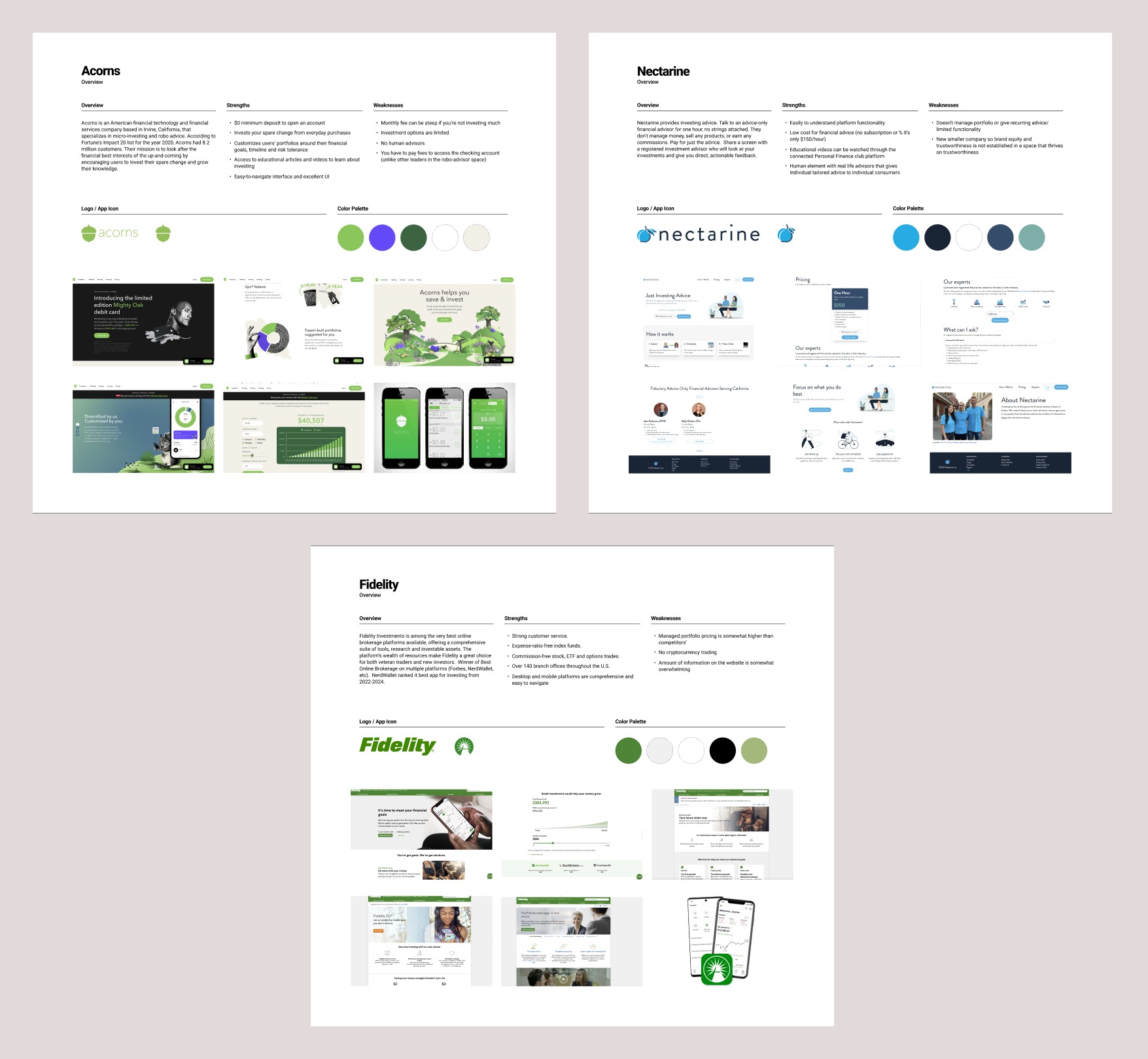
The competitive audit surfaced one idea worth building on. Nectarine sold one-time financial advising for a flat fee, which raised the real question: if a single session with a generalist is worth paying for, what happens when the advisor comes from the user’s own corner of the creative industry and never needs the context explained? Creatives would feel understood in a previously tension-filled space.
Competitive Audit
What the Research Revealed
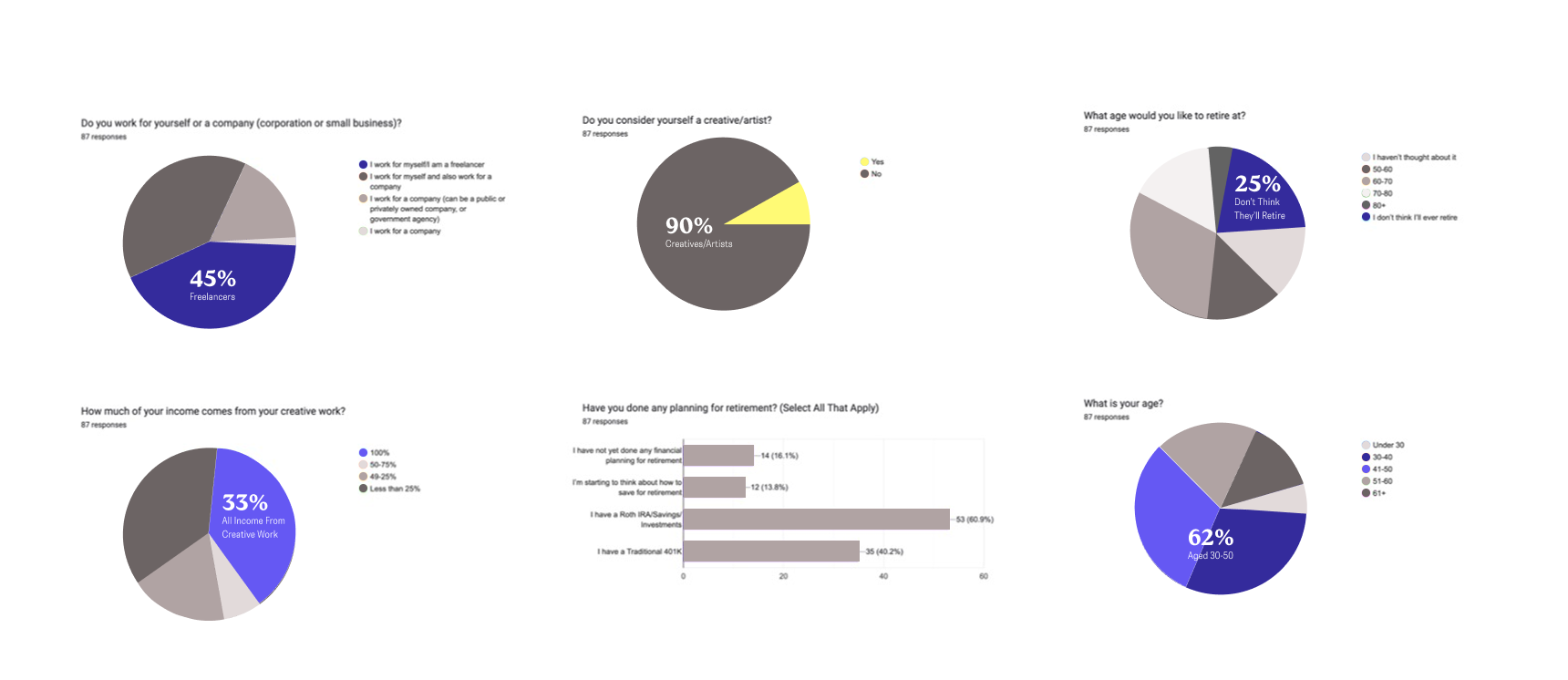
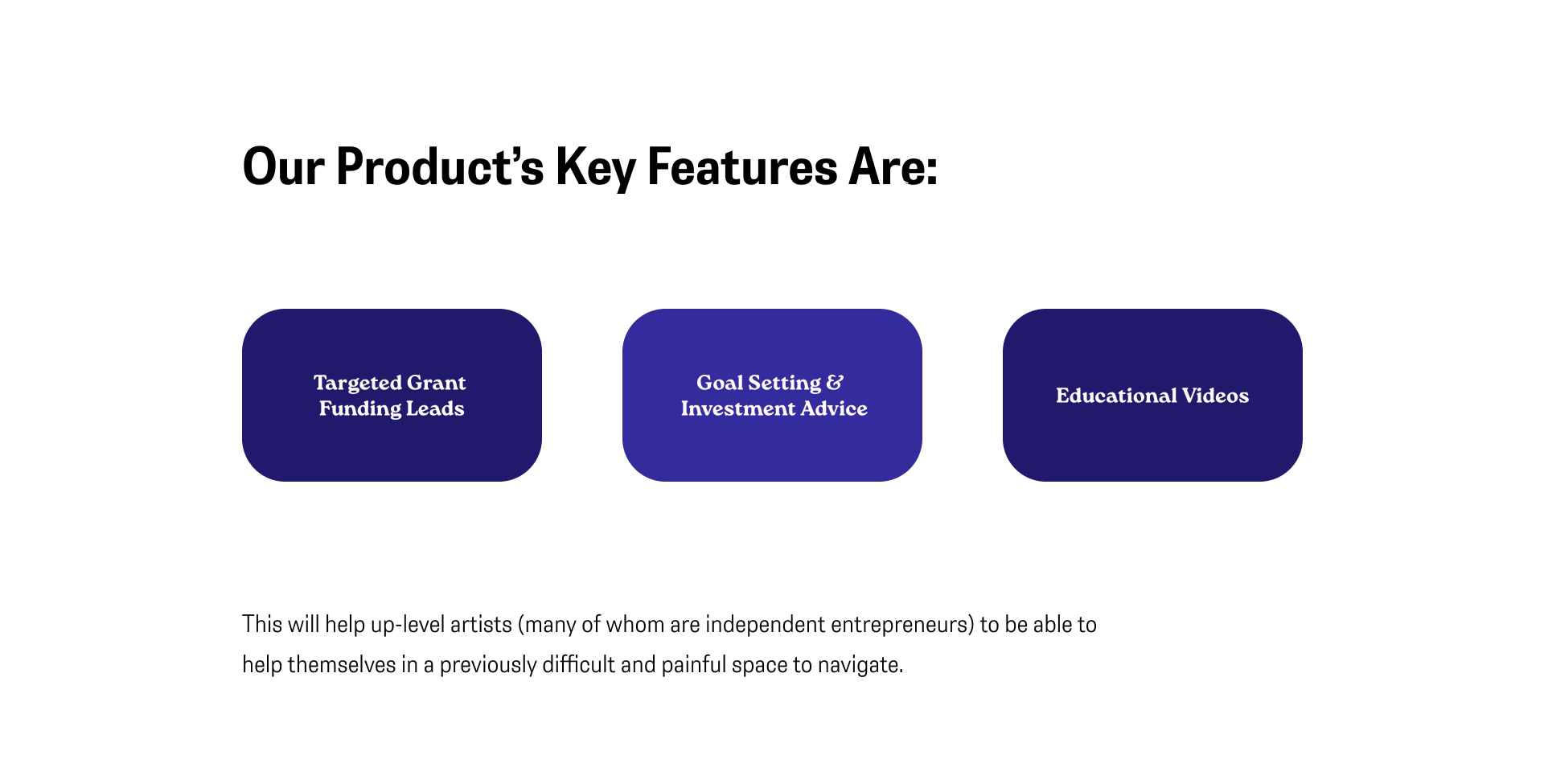
The research consisted of 87 screener responses and four in-depth interviews. From the screener, one stat highlighted the core issue: 25 percent of respondents felt they would never be able to retire. Retirement itself no longer felt plausible. Although six in ten already held a Roth IRA, savings, or investments, the gap wasn’t accounts. It was advice geared directly toward how creatives should map out their future. The interviews turned that gap into three features: targeted grant funding leads, goal setting and investment advice, and educational videos scoped to creative businesses.
Screener Survey Results
Key Features
Branding System
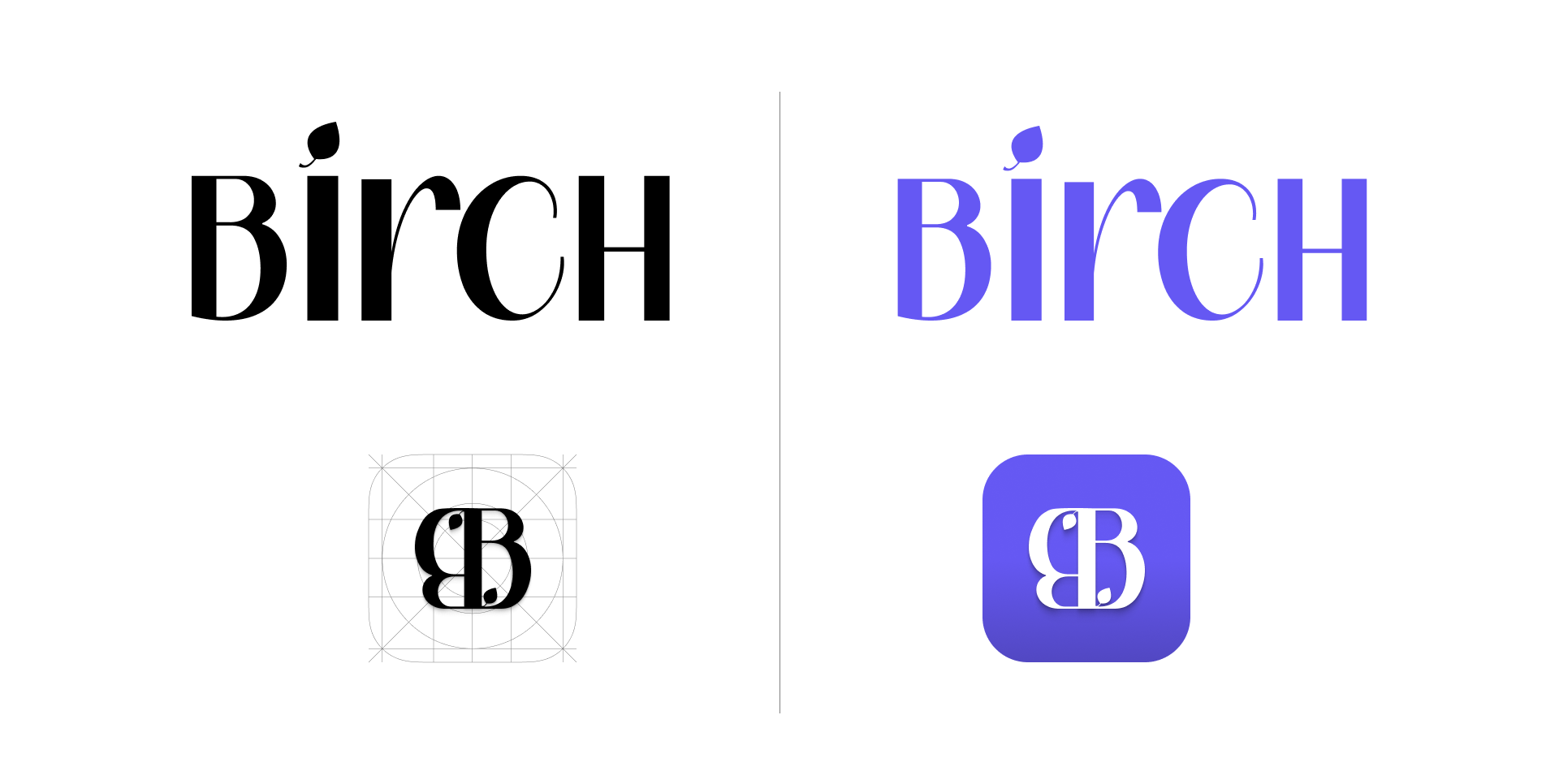
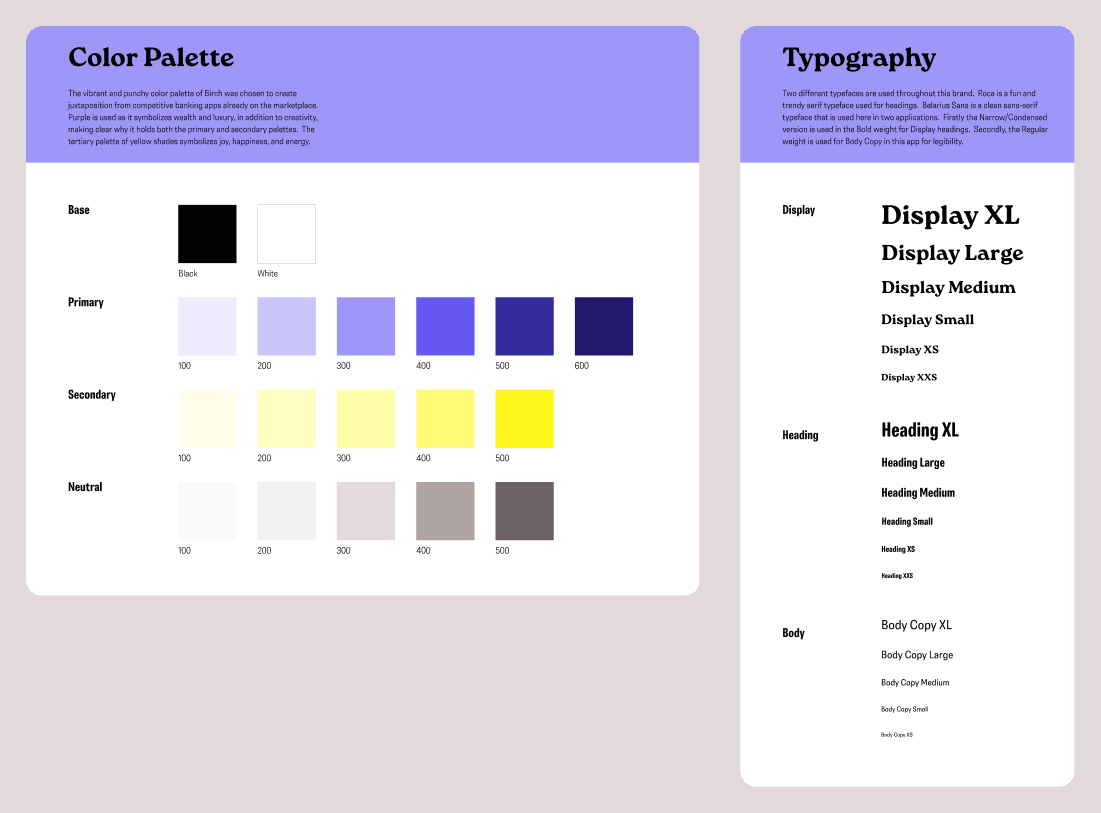
Nearly every product in this space defaults to green and blue, the colors of money and trust. Building for creatives called for something bolder. Birch runs on a vibrant purple carrying wealth and creativity, a punchy yellow for joy and energy, and the serif display face Roca over the clean Belarius Sans. The name followed the same logic: birch trees symbolize the one who never stops wondering, and in Celtic mythology they mark new, pure beginnings. That made it the right name for an app growing new financial futures for creatives.
Logo & App Icon
Design System: Atoms
Design System: Molecules
Application
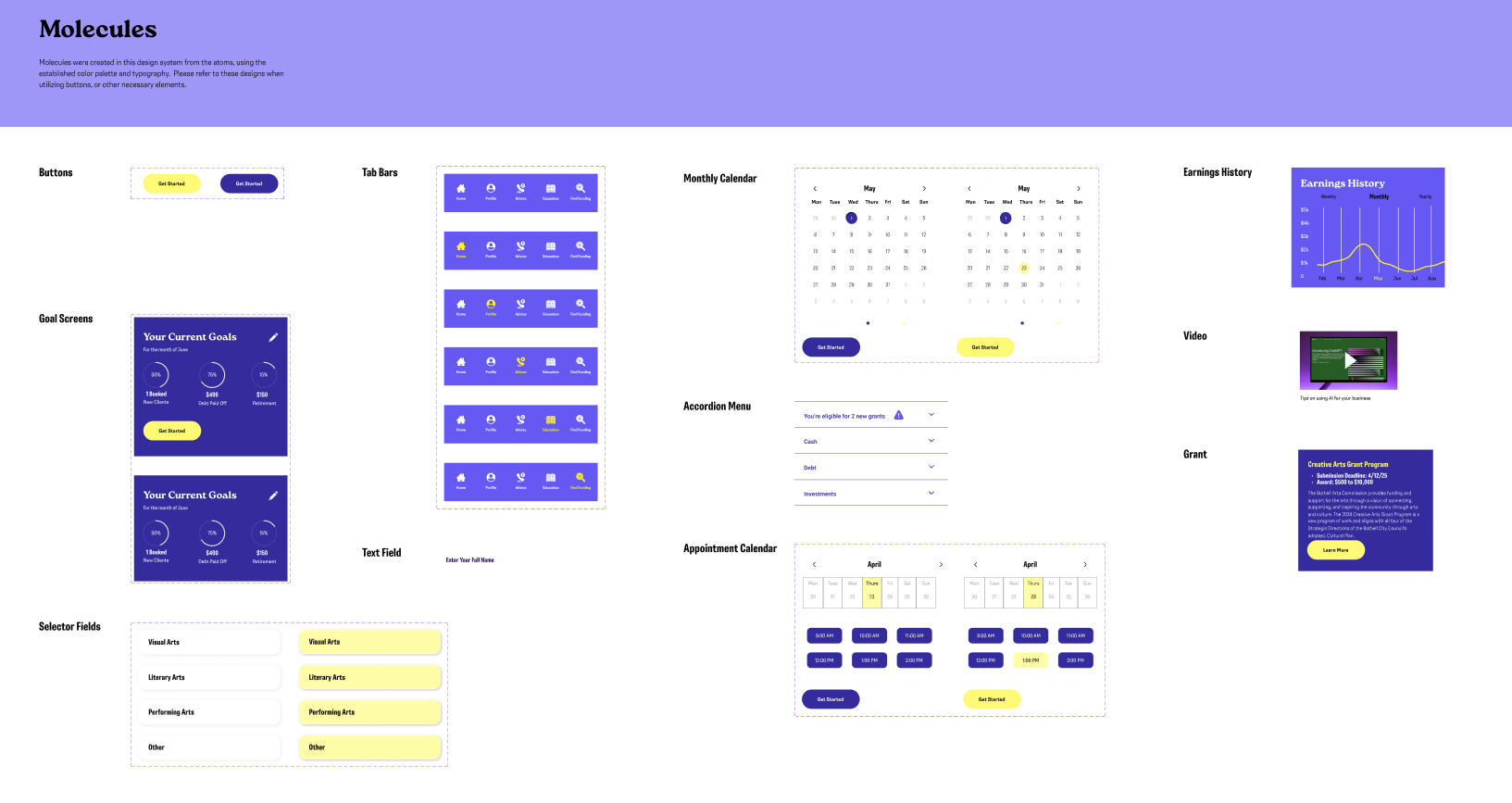
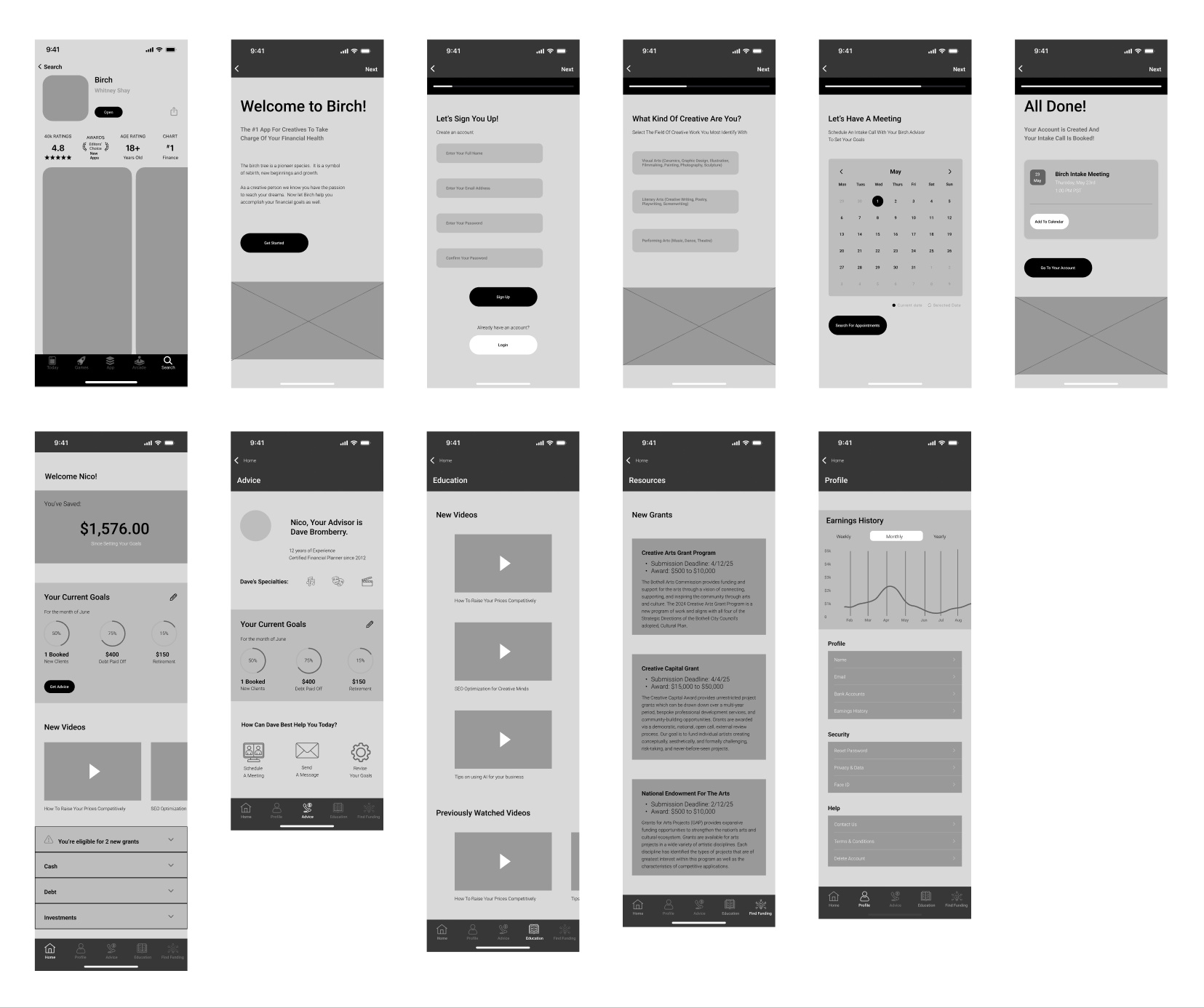
After gathering users’ pain points and needs, the Birch application took shape. A user is paired with a financial planner whose expertise sits in their own creative field, so recommendations arrive as specific action items rather than general advice. Grants are pre-filtered and fed directly into the app, and educational videos on creative small business and finances are there when a user wants them. Click through the tabs for each screen, or use the app directly: from the onboarding steps that establish what kind of creative someone is, to booking the intake call, to the educational videos and the funding resources filtered for that user. Birch takes the friction out of financial planning for people who are already overworked.


Next Steps
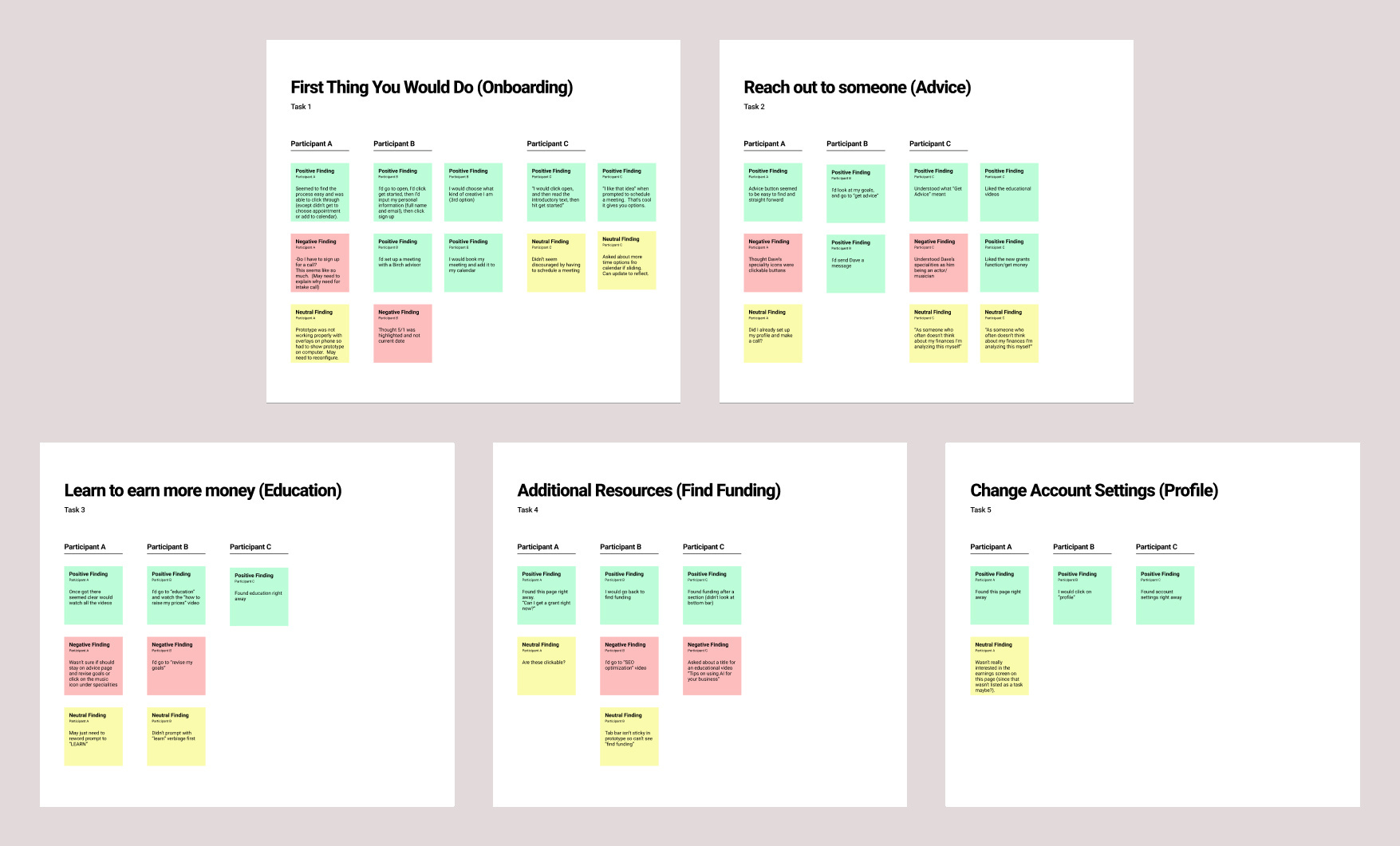
Moderated testing put the wireframe prototype in front of three participants across five tasks. All three finished every one, and only onboarding produced friction: asked to get started, one participant balked at the intake call (“Do I have to sign up for a call?”) because the flow never explained why it existed. That finding restructured onboarding. The plan moving forward is to build this concept into a real product, which introduces constraints the prototype could set aside: video conferencing to host the intake call, a secure banking API behind the earnings and portfolio summary, financial advisors licensed state by state, and a price that stays within reach for creatives working on thin margins.
Wireframes: The Tested Flow
Usability Testing Findings